

Over the past three decades, Dubai has demonstrated an unusual ability to transform vision into tangible reality. What began as an ambitious regional trading hub has evolved into one of the world’s most dynamic metropolitan economies. Yet the city’s current trajectory suggests that its most significant transformation may still lie ahead.
As Dubai approaches the next decade of development, the emirate is positioning itself as a model for future urban living, a place where technology, infrastructure, sustainability and lifestyle are deliberately integrated into a single urban ecosystem. For residents, investors and global institutions alike, the city increasingly represents an emerging blueprint for what the next generation of global cities could look like.
A City Designed for Strategic Growth
Dubai’s transformation is not unfolding organically; it is the result of deliberate long-term planning supported by comprehensive urban strategies such as the Dubai 2040 Urban Master Plan. The framework outlines how the city intends to accommodate rapid demographic growth while maintaining high standards of livability and infrastructure efficiency.
Population expansion remains one of the most significant drivers behind Dubai’s forward planning. The emirate’s population has already surpassed four million residents, and long-term projections indicate that it could reach approximately 5.8 million by 2040, requiring large-scale investment in housing, transportation and public services.
This expansion is not simply about accommodating growth; it reflects Dubai’s ambition to remain one of the most attractive destinations for international talent, entrepreneurs and high-net-worth residents.
Urban development plans anticipate that 55 percent of residents will live within 800 meters of a major public transport station, ensuring that mobility remains efficient even as the population increases. At the same time, the city aims to double the size of green and recreational areas and expand public beaches by more than 400 percent, reinforcing the balance between density and quality of life.
These initiatives signal a long-term commitment to designing a city that grows intelligently rather than simply expanding outward.
Infrastructure Built for the Next Generation of Cities
A defining feature of Dubai’s future development lies in the scale and ambition of its infrastructure investment. Major projects in transportation, digital connectivity and urban mobility are reshaping how the city functions on a daily basis.
Public transport expansion continues to play a central role in this transformation. New metro lines and station developments are being integrated into the broader urban plan, including projects that will expand the network to dozens of stations and serve hundreds of thousands of passengers daily in the coming decade.
Mobility strategies extend beyond traditional infrastructure. Dubai has announced targets for 25 percent of transportation to be autonomous by 2030, supported by initiatives ranging from self-driving taxis to emerging urban air mobility systems such as flying taxis and advanced aerial transport corridors.
The result is an ecosystem where infrastructure is not only expanding but evolving technologically, positioning Dubai among the global leaders in mobility innovation.
Technology as the Foundation of Urban Life
Dubai’s approach to future living places technology at the core of its governance and service delivery systems. The city has implemented one of the most advanced digital government ecosystems globally, enabling residents to access hundreds of services through unified digital platforms.
The emirate’s digital transformation has earned global recognition. In the IMD Smart City Index 2025, Dubai ranked fourth worldwide and first across the GCC and Asia, reflecting substantial progress in technology-driven governance, mobility systems as well as digital infrastructure.
More than 99 percent of government services are now accessible online, allowing residents to complete administrative procedures including licensing, payments and healthcare appointments through integrated digital platforms. This shift toward digital governance has significantly streamlined public services while reducing administrative complexity.
The broader ambition extends beyond convenience. Digital systems allow urban planners to monitor energy consumption, traffic flows and environmental indicators in real time, enabling cities to adapt dynamically to changing demands.
Sustainability as a Central Urban Principle
While Dubai is often associated with architectural ambition and rapid development, sustainability has increasingly become a core component of its long-term strategy.
Urban planning frameworks aim to preserve 60 percent of the emirate’s land as natural reserves or rural areas, ensuring that environmental protection remains part of the city’s growth model. At the same time, green building regulations, renewable energy investments and smart energy grids are being incorporated into new developments.
Large-scale initiatives such as the Mohammed bin Rashid Al Maktoum Solar Park, which is one of the largest single-site solar projects globally, illustrate how renewable energy is being integrated into the emirate’s infrastructure.
These efforts reflect a broader recognition that the future competitiveness of global cities will depend on economic dynamism and environmental resilience as well.
A Magnet for Global Capital and Talent
Dubai’s evolution into a future-oriented city has significant implications for global investment and migration patterns. The emirate continues to attract entrepreneurs, multinational corporations and high-net-worth individuals seeking stability, connectivity and lifestyle quality.
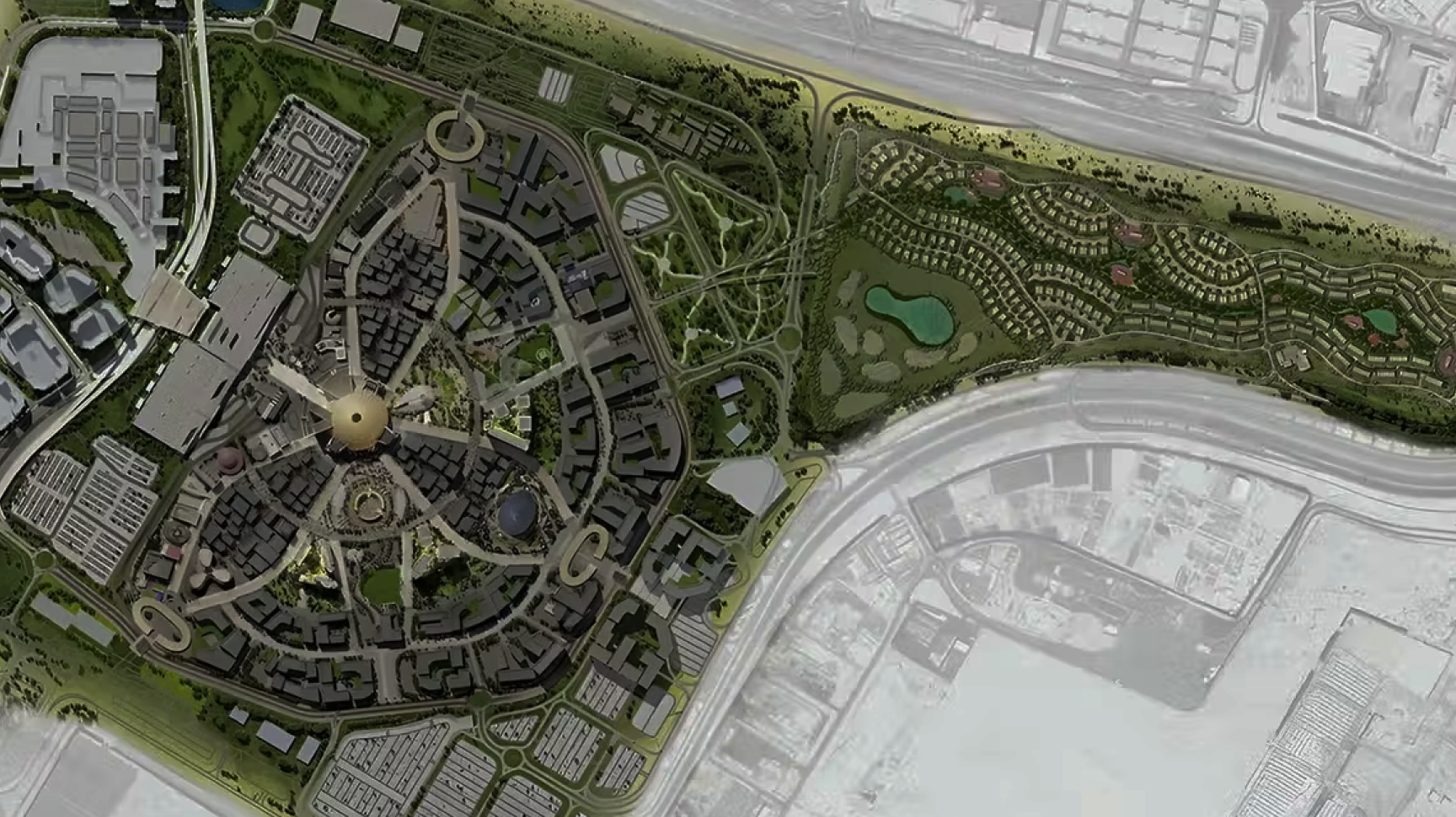
The expansion of financial and business ecosystems plays a key role in this dynamic. Major developments within the Dubai International Financial Centre are designed to accommodate tens of thousands of companies in the coming decades while integrating residential, commercial and cultural spaces into a single urban district.
This integrated model, where business, residential living, and cultural amenities converge, reinforces Dubai’s ambition to become one of the world’s most influential economic and lifestyle hubs.
A New Model for Global Urban Living
The significance of Dubai’s transformation extends beyond regional growth. Increasingly, urban planners and policymakers worldwide are studying the emirate’s approach to city building.
What distinguishes Dubai is the scale of its development combined with the remarkable speed at which strategic vision is translated into infrastructure, policy and tangible investment outcomes.The city functions as a testing ground for emerging technologies, mobility solutions and governance models that may later be adopted elsewhere.
For residents and investors alike, this forward momentum creates a distinctive proposition: a city that continuously reinvents itself while maintaining a clear long-term direction.
Looking Toward the Next Decade
By the end of this decade, Dubai is expected to stand as one of the most technologically advanced and globally connected urban environments in the world. Its growth trajectory suggests a future where innovation, livability and economic opportunity coexist within a carefully orchestrated urban framework.
For those observing global real estate and urban development trends, the emirate represents more than a successful city. It illustrates how strategic planning, technological integration and international openness can redefine what a modern metropolis can become.
Dubai’s story is still unfolding, yet the foundations being laid today indicate that the next chapter may position it as one of the most influential models for future living worldwide.